
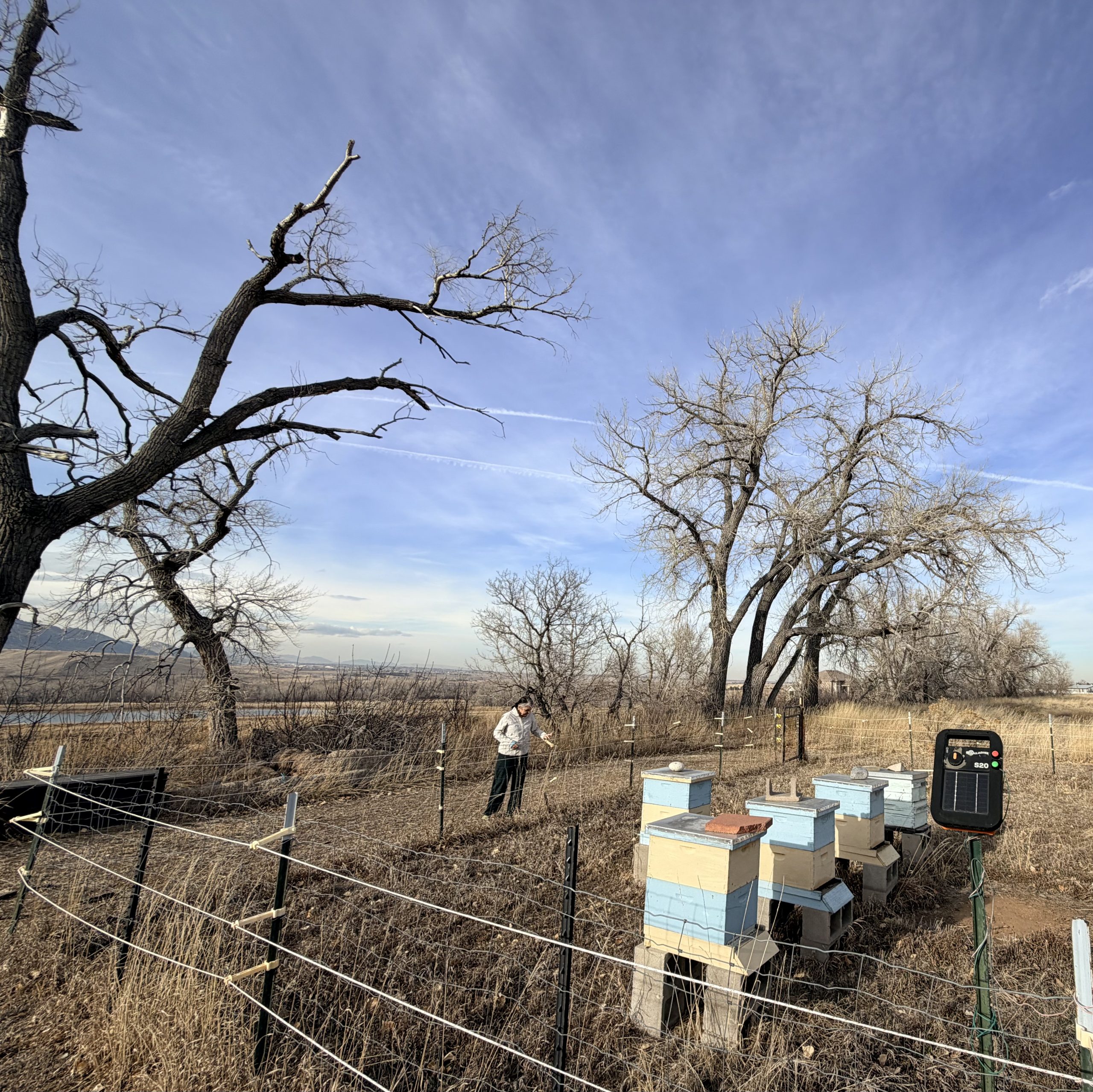
As winter slowly loosens its grip, subtle changes begin to unfold at Seven Stones Chatfield. Longer daylight hours, shifting temperatures, and the quiet promise of growth signal a delicate transition; one that bees and beekeepers navigate with care and patience.
Spring doesn’t arrive all at once. For bees, it begins long before the first flower blooms.
The Delicate Shift Inside the Hive
Inside the hive, the winter cluster gradually expands. As days grow slightly warmer, and temperatures go above 55 F, bees begin moving more, consuming stored honey and preparing for renewed activity. The queen starts increasing egg production, beginning to lay eggs that would become smaller “worker bees” instead of the “winter bees” signaling the colony’s gradual return to growth.
Yet this transition is one of the most vulnerable times for bees.
Warm spells followed by cold snaps can be especially dangerous. Bees may break their cluster too early, burning through food reserves or exposing themselves to freezing temperatures. This is why steady observation is key.
Drought, Plants, and the Need for Awareness
Colorado’s dry conditions add another layer of complexity. Limited moisture reduces the availability of early-season floral resources, making it harder for bees to find nectar and pollen once they begin flying again.
Mary emphasizes the importance of non-GMO and pollinator-friendly plants in supporting bee health. Gardeners play a crucial role in this transition period. Even small choices — selecting native plants at local nurseries, like our partners at Jared’s, avoiding treated seeds, and allowing early blooms — can make a meaningful difference.
Bumblebees, often active earlier than honeybees, also benefit from these practices, contributing to broader pollination across the landscape.
Beekeeping at Seven Stones
Spring Preparation Behind the Scenes
While the bees prepare instinctively, the beekeeper’s role becomes more hands-on as winter ends.
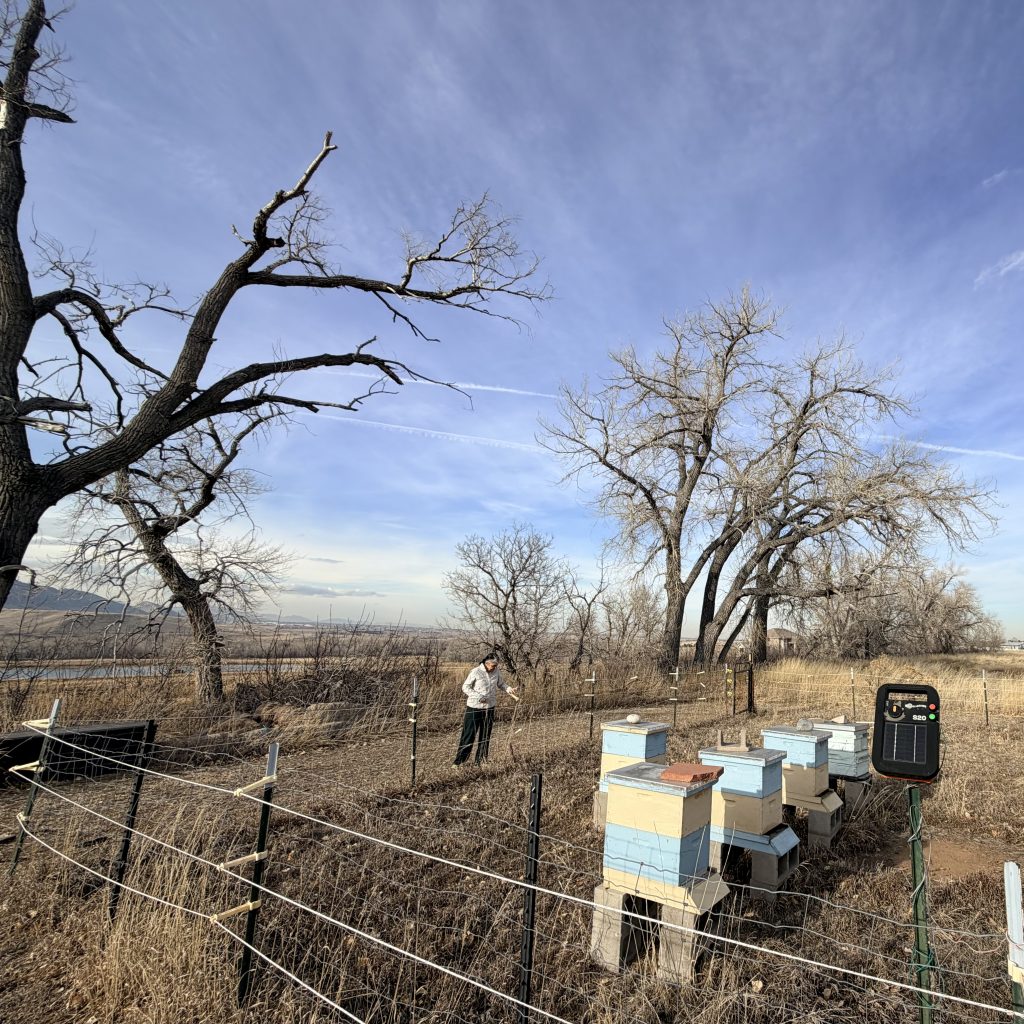
Mary begins assessing hive strength, checking population levels, repairing equipment, and preparing for the season ahead. She ensures protective measures, such as electric fencing around the apiary, remain secure. At Seven Stones, we have an abundance of wildlife visit the natural gardens, including bears that pose the biggest threat to bees.
More than once the last few years, Mary has lost several of her hives, and it’s always been an emotionally charged process. She allowed herself to grieve her bees, and when she was ready, she has invested in a new queen along with a starter hive. Russian and Italian bees, and Carniolan bees do better than other bees in Colorado, so those are her go to choices when this happens.
Winter is also the season for reflection: Which hives thrived? Which struggled? Each answer helps guide future care.
A Lesson in Timing
One of the most important lessons bees teach us is restraint. Spring is not about rushing growth, but about allowing it to unfold naturally.
At Seven Stones, this philosophy is deeply aligned with the land itself. The gardens, the wildlife, and the apiaries all remind us that renewal happens on nature’s timeline, not ours.
As soon as the first dandelions emerge, bees will be venturing out for the first time, giving them their first nectar source of the season. By April, the Queen has converted her colony into worker bees that are ready to go out, forage and start growing the food supplies.
Hope Rooted in Care
The transition from winter to spring is a time of quiet hope. It’s when survival turns into possibility, and stillness gives way to gentle momentum.
Through thoughtful stewardship by our experienced beekeepers, like Mary, and respect for natures cycles, the bees of Seven Stones continue their ancient rhythm — one season flowing into the next, carrying life forward.
If you’d like to know more about beekeeping in Colorado, local beekeeping associations, like Hudson Garden’s and Blessid Bee both offer beekeeping classes starting in the Spring.
