
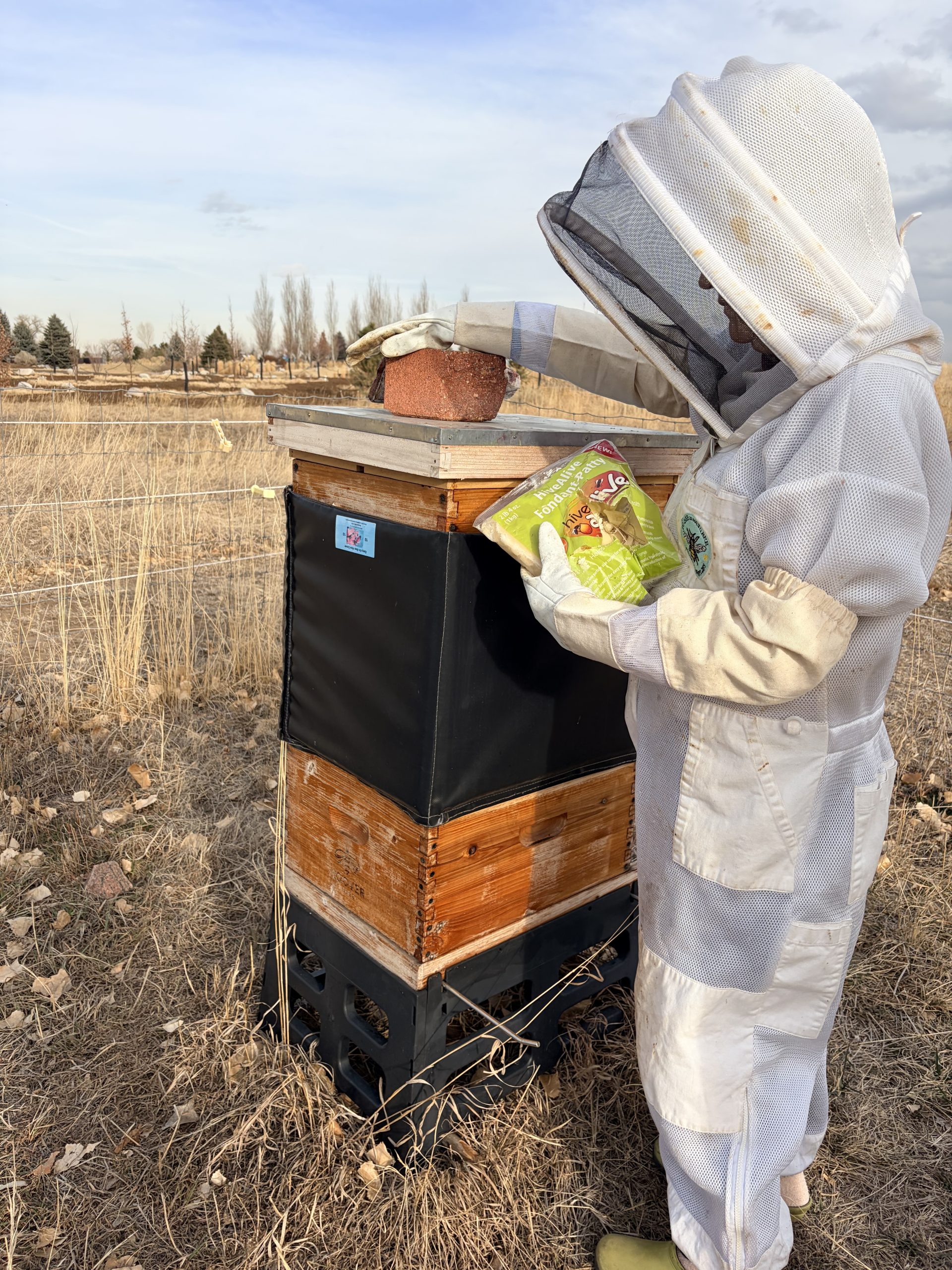
Winter at Seven Stones Chatfield often feels still. The landscape slows, the air sharpens, and nature appears to rest. But beneath that quiet surface, remarkable life continues, especially inside the beehives cared for by one of our beekeepers, Mary Goss.
Many people assume bees hibernate through winter. In reality, bees remain active all season long. They just behave in a very different way.
The Winter Cluster: Keeping The Hive Warm
Rather than sleeping through the cold months, honeybees gather tightly inside the hive in what’s called a winter cluster. This living formation centers around the queen, whom the colony protects at all costs. By clustering together and gently shivering their wings, the bees generate heat and maintain an internal hive temperature of 94–95 degrees, even when outside temperatures drop below freezing.
These winter bees are different from their summertime counterparts. They are slightly larger, built for endurance rather than foraging. They live for about 8 weeks, and their job is not to fly or collect nectar, but to survive, insulate, and preserve the colony until spring returns.
The bees rotate positions within the cluster; those on the outer edges slowly move inward to warm up, while others take their place. It’s a quiet, ongoing act of cooperation that allows the hive to survive months without fresh food.
Stored Honey: The Hive’s Lifeline
During warmer seasons, bees collect nectar and convert it into honey, carefully storing it in honeycomb cells and sealing it with wax caps. Mary makes sure that she leaves plenty of food for them, as these reserves are their sole food source through winter.
However, warm and dry winters, like those Colorado has been experiencing recently, create challenges. When bees sense warmth, they become more active and consume their honey stores faster. Without enough food, starvation becomes one of the biggest threats to a hive’s survival.
This is where a beekeeper’s winter role becomes critical.
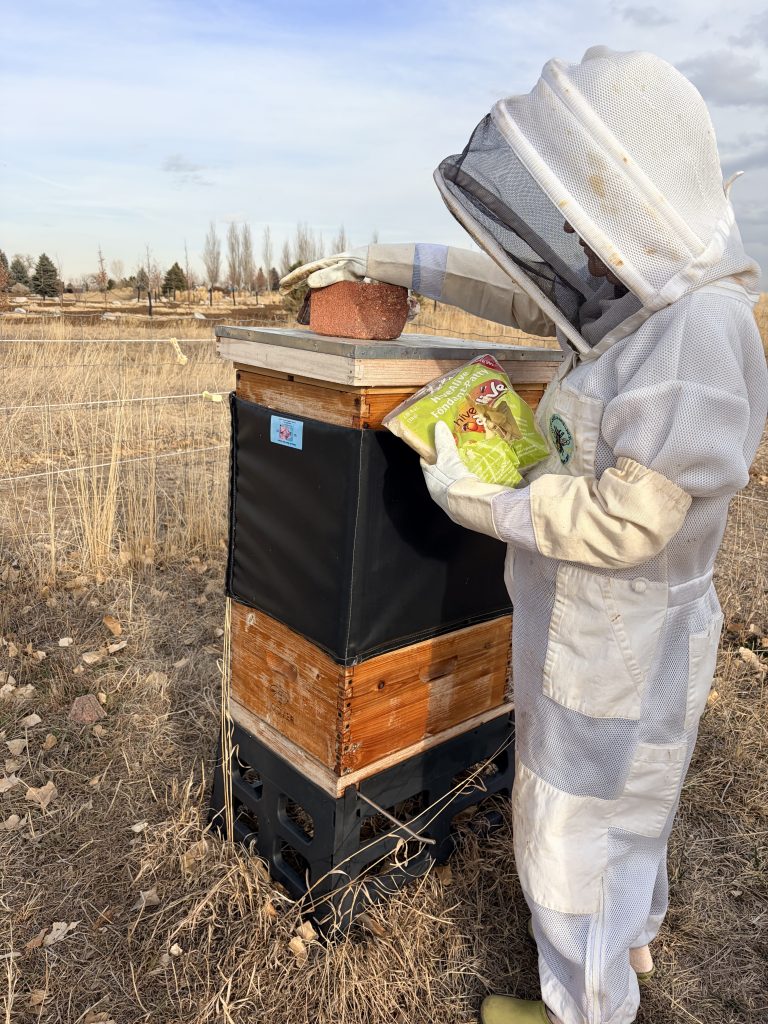
Mary Goss Beekeeper at Seven Stones Chatfield Botanical Gardens Cemetery in Colorado
The Beekeeper’s Quiet Vigil
Winter beekeeping isn’t about opening hives or disrupting the cluster. It’s about observation, preparation, and protection.
Every few weeks Mary checks that each hive remains upright, secure, and weatherproof. When hives start leaning to the side, it can compromise insulation and put an entire colony at risk.
She also monitors hive health using modern tools, including a FLIR camera attached to her phone. This amazing, advanced technology allows her to detect the size and warmth of the bee cluster without opening the hive, ensuring the bees remain undisturbed while still being cared for.
When food supplies run low, Mary supplements with fortified sugar patties that provide essential nutrients. These additions help bridge the gap when natural resources are scarce, especially during prolonged drought conditions.
Threats in the Cold Months
Beyond potential starvation, bees face other winter dangers. Varroa mites — one of the leading contributors to bee population decline — weaken bees by feeding on them and spreading disease. Mary treats for mites in the fall to reduce winter losses, but continued vigilance is essential.
A strong hive population is also critical. Weak hives can be overtaken by other bees seeking resources, a process known as robbing, which can quickly lead to collapse.
Stewardship Through Stillness
Winter at Seven Stones reminds us that care doesn’t always look busy. Sometimes, it looks like watching closely, intervening gently, and trusting natural rhythms.
Inside the hive, the bees teach us about resilience through togetherness. Outside, the beekeeper mirrors that dedication — ensuring that when spring arrives, life is ready to emerge once more.
If you’d like to know more about beekeeping in Colorado, local beekeeping associations, like Hudson Garden’s and Blessid Bee both offer beekeeping classes starting in the Spring.
