
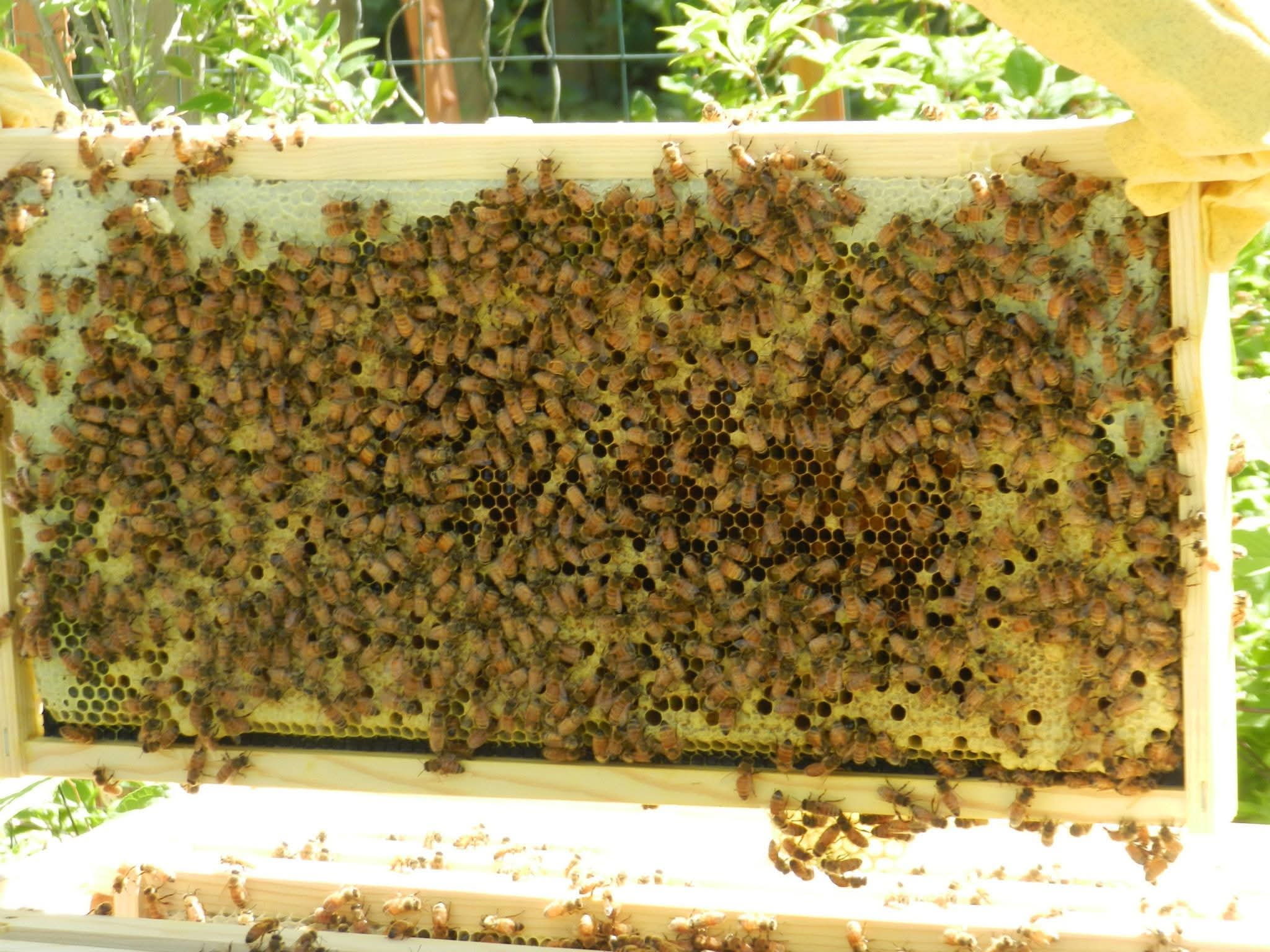
At Seven Stones, there’s always something happening beneath the surface. While visitors enjoy the gardens, walking paths, and peaceful surroundings, an entire world of activity is taking place among the flowers, trees, and beehives.
And as Fall is rolling around, our resident honeybees are getting ready for one of their most important seasons: Winter.
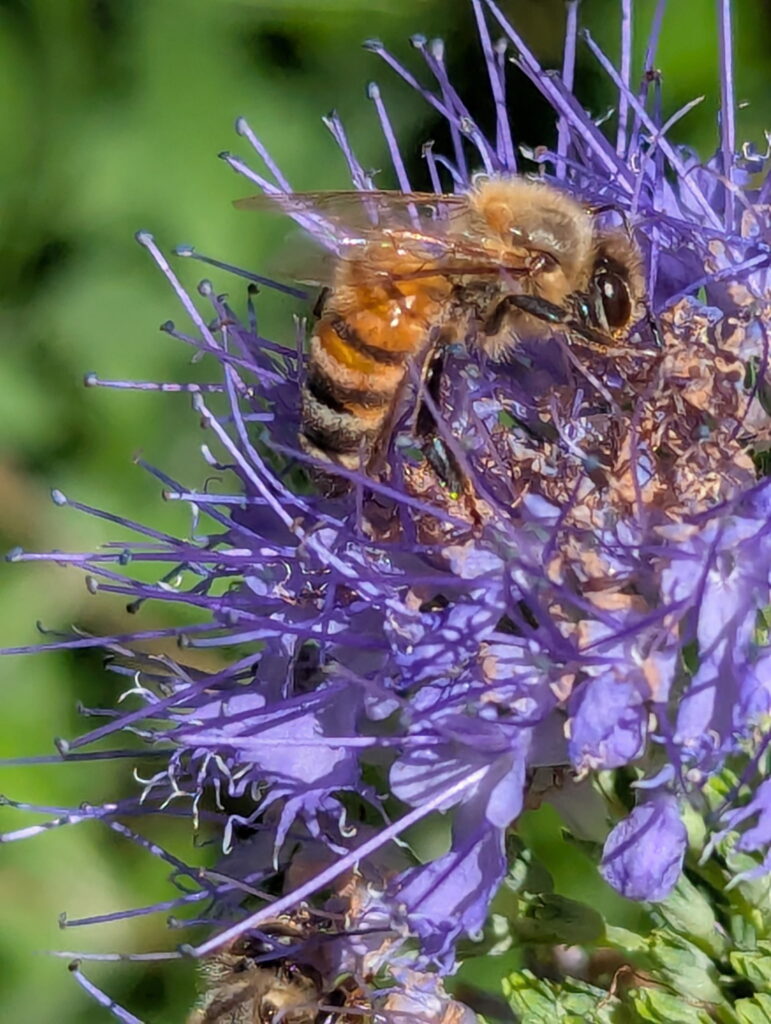
We recently spent some time with our beekeepers, Nena Davis and her husband, Andrew Henckler, who are a couple of our beekeepers that care for the hives at Seven Stones. Watching them work was a reminder of just how fascinating (and occasionally intimidating!) the natural world can be.
A Little Less Honey, A Lot of Heart: Preparing Seven Stones’ Bees for WinterWhen I visited, they were in the middle of tending to a particularly vocal hive. The bees were buzzing loudly, and it was clear they had some strong opinions about Nena and Andrew disturbing their peace. Since I wasn’t wearing the protective gear that Nena and Andrew had on, they encouraged me to admire their work from a healthy distance. Sometimes appreciating nature means knowing when not to get too close!
But there was plenty to learn, especially about how this year’s unusually dry conditions have changed the way our beekeepers prepare the colonies for the colder months ahead.
A Drier Summer Means Less Honey to Share
A Little Less Honey, A Lot of Heart: Preparing Seven Stones’ Bees for Winter
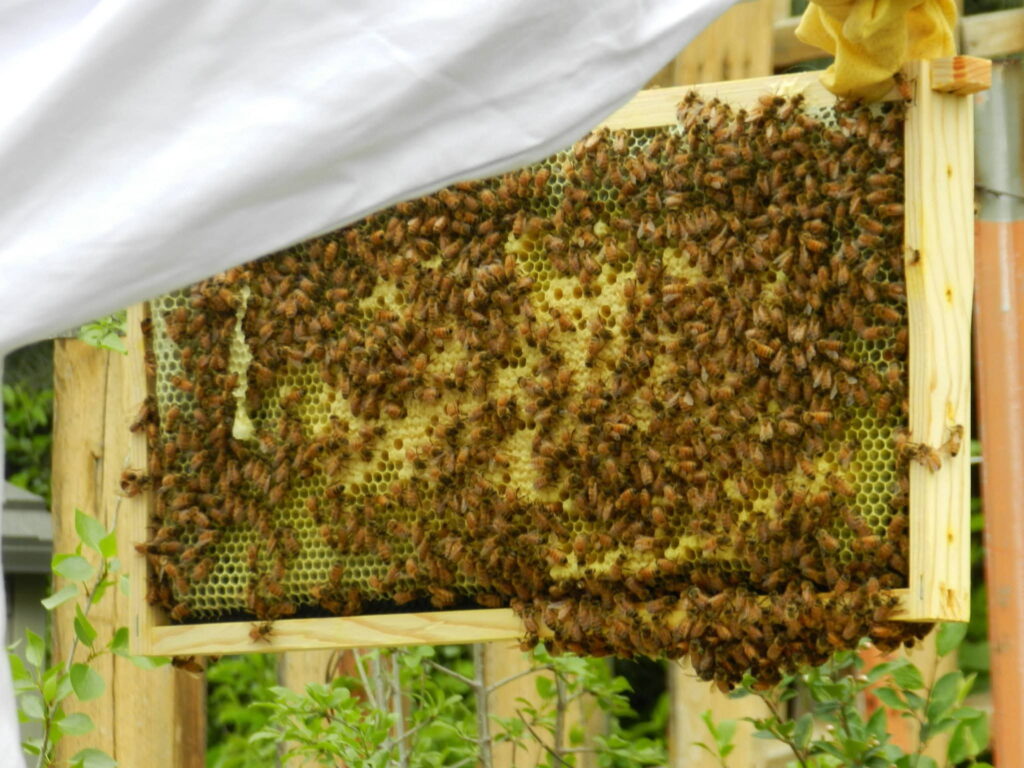
Honeybees depend on flowering plants for nectar, which they transform into honey to feed their colony. But when conditions are dry, flowers may produce less nectar, and some may bloom for shorter periods or not at all.
This year’s dry climate has made it more challenging for the bees at Seven Stones to gather the resources they need. As a result, honey production has been lower than in previous years.
For beekeepers, this changes the usual end-of-season routine. In a more productive year, there may be enough surplus honey to harvest while still leaving plenty for the bees. This year, however, Nena and Andrew are taking a different approach.
Instead of taking honey from the hives, they will leave those valuable stores for the bees themselves. It’s a simple but important decision. The honey these little workers have managed to produce is their food supply for the long winter ahead. And when temperatures drop, they will need every bit of it.
A Winter Colony Is a Very Different Community
During the height of summer, a healthy hive can be home to an astonishing 50,000 to 60,000 bees. That’s a lot of buzzing, building, gathering, and organizing!
But winter brings a dramatic change. A colony may shrink to approximately 10,000 to 20,000 bees as the population naturally shifts to conserve resources.
One of the more surprising parts of this seasonal transition is what happens to the male bees, known as drones. Unlike female worker bees, drones don’t gather nectar, produce honey, or defend the hive. As winter approaches and food becomes scarce, worker bees stop feeding the drones and push them out of the hive. It’s nature’s rather blunt way of making sure limited food supplies go to the bees that are essential to the colony’s survival.
At the same time, the queen begins producing a special generation of bees known as winter bees.
Unlike their summer counterparts, which typically live only four to six weeks, winter bees can survive for four to six months. They develop larger fat bodies and greater nutritional reserves, allowing them to live much longer and help the colony make it through the cold months. It’s an incredible example of how a colony adapts to the changing seasons.
No Hibernation Here: The Winter Bee Cluster
A Little Less Honey, A Lot of Heart: Preparing Seven Stones’ Bees for Winter
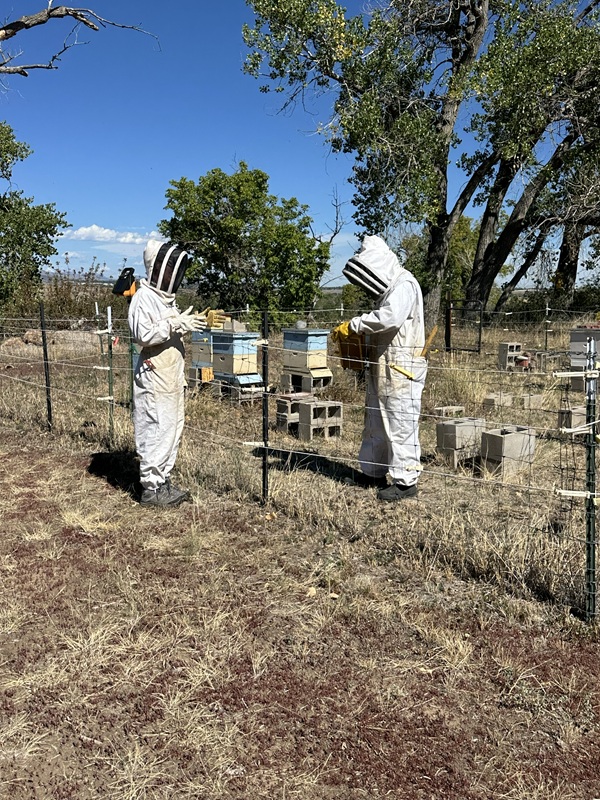
Honeybees don’t hibernate when winter arrives. Instead, they have a remarkable strategy for staying warm: they form a tightly packed group called a winter cluster.
When temperatures fall below approximately 50°F, the bees gather closely around their queen. Those on the outside form an insulating layer, while bees toward the center generate heat by contracting their flight muscles. Essentially, they’re shivering to keep the entire community warm!
The temperature inside the cluster can vary considerably. The outer layer stays much cooler, while the center can reach approximately 80°F to 95°F when brood (developing baby bees) is present.
And here’s another fascinating detail: the bees don’t stay in one position. They slowly rotate between the warmer interior and the cooler exterior, giving everyone a chance to warm up.
All this activity happens inside a seemingly quiet hive. From the outside, it might look like the bees have simply disappeared for the winter. In reality, they’re working together to maintain a very carefully balanced little world.
A Little Bee Housekeeping Before Winter
Before winter really sets in, honeybees also prepare their homes for the cold. Worker bees collect tree resins and combine them with other materials to create a sticky substance called propolis, sometimes affectionately known as “bee glue.” They use this natural material to seal small cracks, narrow the entrance to the hive, and block drafts. Think of it as their version of weatherproofing a home before the first snow!
Nena and Andrew have another clever tool to help them monitor the colonies during this time. Using a temperature-reading device, they can check the temperature inside the hive without opening the boxes and disturbing the bees. It’s a small but important advantage. During winter, every bit of stored energy matters, and keeping unnecessary disturbances to a minimum helps the colony conserve its resources.
Nature Has a Way of Taking Care of Its Own
As we watch the seasons change at Seven Stones, the bees offer a wonderful reminder that every living thing has its own rhythm and its own way of adapting.
This year, the dry conditions have meant less honey, which makes Nena and Andrew’s decision to leave those precious stores with the bees even more meaningful. Their work isn’t simply about caring for the hives or producing honey. It’s about understanding what the bees need and giving them the best possible chance to thrive when spring returns.
Soon, the gardens will grow quieter, the flowers will rest, and the bees will settle into their winter clusters. But beneath the lids of those hives, thousands of tiny lives will be working together, keeping warm, conserving food, and waiting for another Colorado spring.
And when warmer days arrive, they’ll be back at it, visiting flowers, gathering nectar, and doing their part to keep the natural world flourishing.
At Seven Stones, we believe there’s something extraordinary about the way nature works. Sometimes, all it takes is slowing down, looking a little closer (from a safe distance, of course!), and appreciating the remarkable life happening all around us.
