
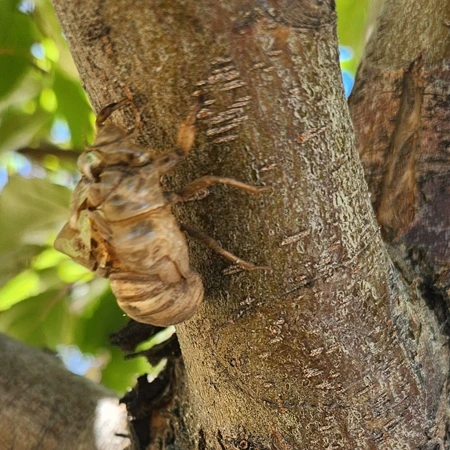
Take a walk through the gardens at Seven Stones and you may notice more than beautiful flowers, trees, and pathways. Look a little closer and you’ll discover a whole community of tiny residents; some flying from flower to flower, some hiding among the leaves, and others quietly helping keep the garden ecosystem in balance.
Because Seven Stones sits along Colorado’s Front Range, close to the Rockies, our gardens are part of a unique landscape where cultivated gardens meet the natural world. And that means insects are very much a part of the picture.
We recently talked with gardener Amy Lynch about some of the insects she encounters in the gardens. What we discovered is a good reminder that appearances can be deceiving. An insect that looks intimidating might actually be helping the garden, while another that seems harmless may occasionally nibble on our plants.
So, let’s meet a few of our six- and eight-legged garden neighbors.
Friends of the Garden
Banded Net-Winged Beetle: A Harmless Helper
The Banded Net-winged Beetle is one of those insects that may catch your eye without causing trouble for the plants around it.
These beetles are considered friends rather than foes. Adults feed on flower nectar and pollen, while their larvae live in leaf litter. They are also part of the garden’s natural pest-control community.
That leaf litter they call home is important, too. What may look like simple garden debris can provide habitat for an entire world of tiny organisms.
Cicada Killer Wasp: Don’t Let the Name Fool You
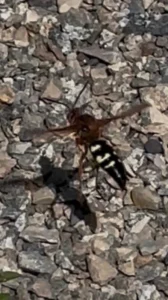
Cicada Killer Wasp
“Cicada killer” sounds like an insect we should be running away from, but this is another fascinating garden ally.
Cicada Killer Wasps hunt cicadas, which they paralyze and bring back to underground nest chambers as food for their young. They are solitary wasps, unlike the social yellowjackets many of us associate with aggressive behavior.
They may look intimidating because of their size, but their presence tells us something interesting about the natural food web happening right beneath our feet.
In other words: if you spot one doing its thing in the garden, it may be best to simply give it some space and appreciate the role it plays.
Prairie Robber Fly: A Hunter on the Wing
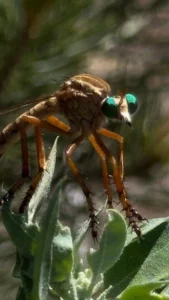
Prairie Robber Flies
The Prairie Robber Fly is another insect that can look a little fierce. And in this case, its appearance isn’t entirely misleading!
Robber flies are predators. They catch other insects while flying, making them part of nature’s built-in pest-control system.
They’re a wonderful example of why we shouldn’t judge every insect by whether it looks “pretty” or “friendly.” In a healthy garden, predators have a job to do, too.
Dragonflies: Mosquito Hunters
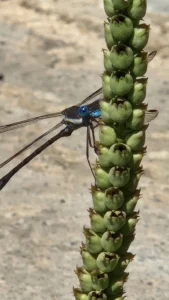
Dragonfly at Seven Stones
Few garden visitors are as impressive as a dragonfly.
These agile fliers are fierce predators, catching insects in midair. They feed on mosquitoes, flies, midges, and other small flying insects, making them welcome visitors around the gardens.
Their presence is also a beautiful reminder that a garden doesn’t exist in isolation. The insects we see overhead are connected to what is happening in the plants, soil, water, and surrounding landscape.
Praying Mantises: Patient Predators
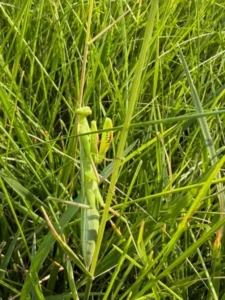
praying mantis at Seven Stones
Praying mantises may look like they’re quietly meditating among the flowers, but they’re actually waiting for their next meal.
Mantises are generalist predators that eat many different insects, including aphids. CSU Extension identifies mantises as beneficial predators in the garden.
And they’re certainly one of the more fascinating insects to encounter. Their unusual appearance and patient hunting style make them a memorable part of the garden experience.
What About Cicadas?
Cicadas have a complicated reputation. Their loud summer songs can certainly get our attention, but they’re not necessarily the garden villains we might imagine.
Colorado is home to nearly 30 species of cicadas, and most cause little direct injury to plants. Their young live underground and feed on fluids from plant roots, while adults feed on plant fluids above ground.
The biggest concern can occur when large numbers of certain cicadas lay eggs in the small branches of trees and shrubs, which can cause some twig dieback or weakened branches.
But cicadas also play an important role in the ecosystem. When they emerge, they become an abundant seasonal food source for birds, mammals, and reptiles.
And there’s another wonderful connection: cicadas and cicada killer wasps are part of the same story. The wasps actually capture cicadas to feed their young.
Nature is rarely as simple as “good” or “bad.”
And Then There Are the Katydids
Katydids are another familiar summer garden visitor. They may nibble on plants, but they also play an important role in the larger food chain.
Katydids become food for birds, bats, and other predators. In other words, even an insect that occasionally takes a bite out of a leaf can serve a purpose beyond the plant it’s eating.
That’s one of the most interesting things about spending time in a garden: everything is connected.
A Garden Is More Than What We Plant
It’s easy to think of a garden as a collection of flowers and plants that we carefully choose and maintain. But a healthy garden is really a community. Flowers provide nectar and pollen. Leaves provide food. Trees provide shelter. Soil and fallen leaves provide habitat. Insects provide food for birds and other wildlife. Predators help keep other insect populations in check. And sometimes, the insects we think we need to eliminate are actually doing something valuable.
Amy and our Seven Stones Garden Team always gets excited when they see a unique bug or interesting creature while going about their ways. Recognizing these beneficial insects can help gardeners appreciate and conserve them, and potentially reduce the need for pesticides.
At Seven Stones, our gardens are part of the experience of being surrounded by nature. They change with the seasons, attract birds and pollinators, and provide a place for countless living things to coexist. So, the next time you see a strange beetle, a dragonfly darting overhead, a praying mantis hiding among the flowers, or even a very large wasp carrying a cicada, take a moment before deciding whether it belongs on the “good” or “bad” list.
It might simply be doing its job. And perhaps that’s one of the beautiful lessons a garden can teach us: every living thing has a role in the larger ecosystem, even when we don’t immediately understand what that role is.
